
Table of Contents
IVF Treatment in UAE: Complete Guide for International Patients 2025
Written by Fertycure Content Writing Team
15+ Years Experience in Fertility contents
Medically Reviewed by Dr. Sandeep, Chief Embryologist
Last Updated: November 17, 2025
Every year, thousands of couples from around the world choose the United Arab Emirates for their fertility treatment journey. If you’re considering IVF treatment in UAE, you’re likely wondering whether this decision is right for you, what the process involves, and what makes UAE clinics stand out from facilities in your home country.
This comprehensive guide answers all your questions about undergoing IVF treatment in UAE as an international patient, from understanding success rates and costs to navigating the legal framework and planning your medical tourism journey.
Why Choose UAE for IVF Treatment?
The United Arab Emirates has rapidly emerged as a global hub for fertility treatment, and the reasons go far beyond luxury accommodations and world-class hospitality.
World-Class Medical Infrastructure
UAE fertility clinics are equipped with cutting-edge technology that rivals and often exceeds facilities in Europe and North America. The country has invested heavily in healthcare infrastructure, with many clinics featuring:
- Time-lapse embryo imaging systems that monitor embryo development 24/7 without disturbing them
- Advanced preimplantation genetic testing (PGT-A) laboratories
- State-of-the-art cryopreservation facilities with vitrification technology
- Clean room environments that exceed international standards
According to the UAE Ministry of Health and Prevention, over 85% of fertility clinics in Dubai and Abu Dhabi hold international accreditation from bodies such as the Joint Commission International (JCI) or the College of American Pathologists (CAP).
Highly Qualified Medical Professionals
The UAE attracts fertility specialists from leading medical institutions worldwide. Many reproductive endocrinologists and embryologists practicing in the UAE have trained at prestigious centers in the United States, United Kingdom, and Europe before bringing their expertise to the region.
When you choose a fertility clinics in UAE, you’re often working with doctors who have:
- Board certifications from multiple countries
- Publications in peer-reviewed fertility journals
- Specializations in complex cases and advanced reproductive techniques
- Multilingual capabilities to communicate with international patients
Strategic Geographic Location
Positioned at the crossroads of Europe, Asia, and Africa, the UAE offers convenient access for medical tourists from multiple continents. Dubai International Airport serves as a major hub with direct flights to over 240 destinations, making your travel logistics significantly easier than reaching many other medical tourism destinations.
Shorter Waiting Times
While patients in countries like the UK and Canada often face waiting lists of six months to two years for publicly funded IVF, UAE clinics typically begin treatment within 4-6 weeks of your initial consultation. This reduced waiting time can be crucial for patients with age-related fertility concerns or those who have already experienced multiple treatment cycles.
Privacy and Discretion
The UAE offers a level of privacy that many international patients value. The medical system operates with strict confidentiality protocols, and the cosmopolitan nature of cities like Dubai means that medical tourists blend seamlessly into the diverse population.
IVF Success Rates in UAE: What You Need to Know
Success rates are naturally one of the most important factors when choosing where to undergo fertility treatment. Understanding these statistics helps you make an informed decision.
Current Success Rate Statistics
Leading fertility clinics in UAE report success rates that compare favorably with international benchmarks:

- Women under 35: 50-60% clinical pregnancy rate per embryo transfer
- Women aged 35-37: 40-50% clinical pregnancy rate per embryo transfer
- Women aged 38-40: 30-40% clinical pregnancy rate per embryo transfer
- Women over 40: 15-25% clinical pregnancy rate per embryo transfer
These figures align closely with success rates reported by top-tier fertility centers in the United States and Europe. The American Society for Reproductive Medicine (ASRM) reports similar age-related success patterns across well-established clinics globally.
Factors That Influence Your Individual Success Rate
It’s essential to understand that published success rates reflect averages across diverse patient populations. Your personal success probability depends on several factors:
Age and Ovarian Reserve: Your age at the time of egg collection remains the single most significant predictor of IVF success. Women using their own eggs see declining success rates after age 35, with a sharper decline after 40. Anti-Müllerian hormone (AMH) levels and antral follicle counts provide additional insight into your ovarian reserve.
Diagnosis and Medical History: The underlying cause of infertility impacts success rates. Patients with unexplained infertility or male factor infertility typically have higher success rates than those with diminished ovarian reserve, endometriosis, or repeated implantation failure.
Embryo Quality and Selection: UAE clinics increasingly utilize preimplantation genetic testing for aneuploidy (PGT-A), which screens embryos for chromosomal abnormalities. When euploid (chromosomally normal) embryos are transferred, success rates can increase to 60-70% per transfer, regardless of maternal age.
Lifestyle Factors: Body mass index (BMI), smoking status, and overall health significantly influence outcomes. Clinics in the UAE typically provide comprehensive lifestyle counseling to optimize your chances before beginning treatment.
Cumulative Success Rates
Many patients require more than one IVF cycle to achieve a successful pregnancy. Cumulative success rates across multiple cycles provide a more complete picture:
- After three complete IVF cycles, women under 35 have approximately 75-85% chance of having a baby
- Women aged 35-39 have approximately 60-70% cumulative success rate after three cycles
- Women aged 40-42 have approximately 30-40% cumulative success rate after three cycles
Cost of IVF Treatment in UAE: Transparent Pricing
Understanding the financial investment required for IVF treatment is crucial for planning your medical tourism journey. The UAE offers competitive pricing compared to many Western countries, often with superior facilities and shorter waiting times.
Standard IVF Cycle Costs
A single conventional IVF cycle in the UAE typically costs between AED 15,000 to AED 25,000 (approximately $4,100 to $6,800 USD). This generally includes:
- Initial consultations and diagnostic testing
- Ovarian stimulation medications
- Egg retrieval procedure
- Fertilization (conventional IVF or ICSI)
- Embryo culture and monitoring
- Embryo transfer
- Pregnancy testing
Cost Comparison: UAE vs. Other Countries
The cost savings compared to other popular destinations can be substantial:
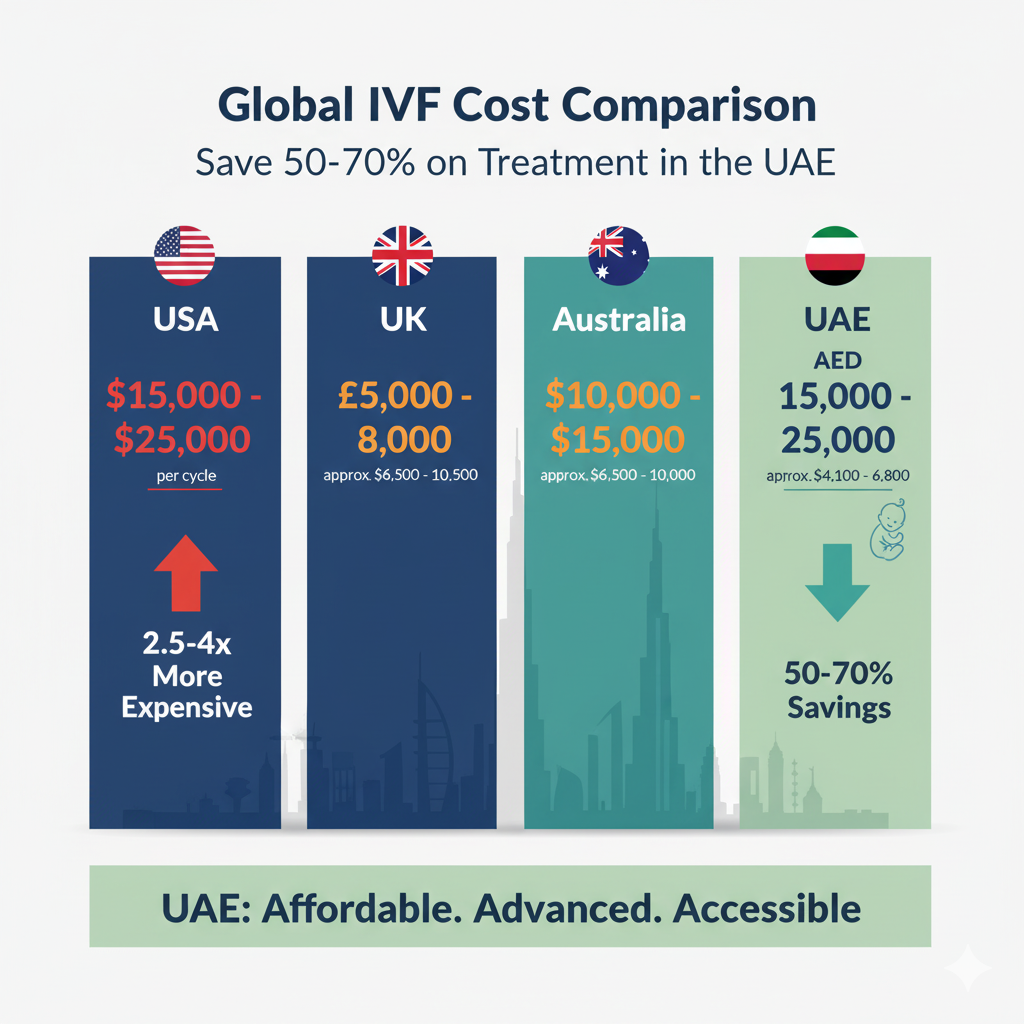
- United States: $15,000-$25,000 per cycle (2.5-4x more expensive)
- United Kingdom: £5,000-£8,000 per cycle (approximately $6,500-$10,500)
- Australia: AUD $10,000-$15,000 per cycle (approximately $6,500-$10,000)
- UAE: AED 15,000-25,000 per cycle (approximately $4,100-$6,800)
These savings become even more significant when you consider that the quality of care and technology in UAE clinics matches or exceeds many facilities in these higher-priced markets.
Additional Costs to Consider
Transparency requires acknowledging expenses beyond the basic IVF cycle fee:
Advanced Procedures:
- ICSI (Intracytoplasmic Sperm Injection): AED 3,000-5,000 additional ($800-$1,360)
- PGT-A (Genetic testing of embryos): AED 8,000-15,000 ($2,200-$4,100)
- Assisted hatching: AED 1,500-3,000 ($400-$800)
- Embryo freezing (first year): AED 2,000-4,000 ($545-$1,090)
- Frozen embryo transfer (FET): AED 8,000-12,000 ($2,200-$3,270)
Medications: Fertility medications typically cost AED 5,000-12,000 ($1,360-$3,270) per cycle, depending on your protocol and dosages required. Some patients save money by purchasing medications in their home country before traveling.
Travel and Accommodation:
- Round-trip flights: Variable based on origin
- Accommodation: AED 150-500 per night ($40-$135) depending on preferences
- Meals and local transportation: AED 100-200 per day ($27-$55)
- Total stay duration: 2-3 weeks for a complete cycle
Payment Options and Financial Planning
Most UAE fertility clinics offer flexible payment arrangements for international patients:
- Installment payment plans (interest-free for 3-6 months)
- Package deals for multiple cycles (10-20% discount)
- Partnership programs with international financing companies
- Credit card payments with reward points
- Direct bank transfers with preferential exchange rates
Legal Framework for IVF in UAE
Understanding the legal requirements and regulations is essential for international patients considering fertility treatment in the UAE.
Marriage Requirements
The UAE requires couples undergoing IVF to be legally married. You must provide:
- Official marriage certificate (with certified translation if not in English or Arabic)
- Valid passports for both partners
- Copies of marriage certificate attested by relevant authorities
This requirement reflects the cultural and legal framework of the UAE, which emphasizes family structures recognized by law.
Donor Gametes and Embryo Disposition
Current UAE regulations have specific provisions regarding donor eggs, donor sperm, and embryo handling:
- Donor gametes are permitted under specific circumstances with proper documentation
- Embryo freezing and storage are available for future use
- Decisions regarding unused embryos must be made in writing by both partners
- Surrogacy regulations follow specific guidelines established by UAE health authorities
It’s important to discuss your specific circumstances with your chosen clinic, as regulations are regularly updated to reflect evolving medical practices and ethical considerations.
Patient Rights and Medical Standards
The UAE has comprehensive healthcare regulations that protect international patients:
- All clinics must maintain licensure from the Dubai Health Authority (DHA) or equivalent regulatory bodies
- Informed consent is mandatory for all procedures
- Medical records are confidential and protected under UAE privacy laws
- Patients have the right to second opinions and transparent communication about success rates
- Complaint mechanisms are established through regulatory authorities
The IVF Process in UAE: Step-by-Step Timeline
Understanding what to expect during your fertility treatment helps you plan your time in the UAE and prepare mentally for the journey ahead.
Phase 1: Initial Consultation and Testing (Week 1)
Your journey begins with a comprehensive fertility evaluation, which can often be partially completed in your home country before traveling to the UAE.
Virtual Pre-Consultation: Many UAE clinics now offer telemedicine consultations, allowing you to meet your doctor, discuss your medical history, and receive preliminary recommendations before booking your travel.
Diagnostic Testing: Your clinic will require recent test results including:
- Hormonal panel (FSH, LH, AMH, estradiol, progesterone, thyroid function)
- Transvaginal ultrasound with antral follicle count
- Semen analysis for the male partner
- Infectious disease screening for both partners
- Additional testing based on your specific history
Treatment Plan Development: Based on your results, your reproductive endocrinologist will recommend a personalized stimulation protocol, explain expected outcomes, and address any concerns.
Phase 2: Ovarian Stimulation (Days 2-12 of Your Cycle)
This phase involves daily hormone injections to stimulate your ovaries to produce multiple eggs, increasing the chances of successful fertilization.
Medication Administration: You’ll self-administer subcutaneous injections of follicle-stimulating hormone (FSH) and sometimes luteinizing hormone (LH). UAE clinics provide thorough training, and many patients find the process easier than anticipated.
Monitoring Appointments: Every 2-3 days, you’ll visit the clinic for:
- Transvaginal ultrasound to measure follicle growth
- Blood tests to check hormone levels
- Protocol adjustments based on your response
Trigger Shot Timing: When follicles reach optimal size (typically 18-22mm), you’ll receive a “trigger shot” of hCG or other medication to finalize egg maturation. Precise timing is crucial, as egg retrieval occurs exactly 34-36 hours later.
Phase 3: Egg Retrieval (Day 14)
The egg retrieval procedure is performed under light sedation or general anesthesia in an outpatient setting.
Procedure Details: Using ultrasound guidance, your doctor inserts a thin needle through the vaginal wall to aspirate follicles and collect eggs. The procedure typically takes 20-30 minutes.
Recovery: Most patients rest at the clinic for 1-2 hours before returning to their accommodation. Mild cramping and bloating are normal. You should avoid strenuous activity for 24-48 hours.
Simultaneous Sperm Collection: Your partner provides a fresh semen sample on the same day, which is processed in the laboratory.
Phase 4: Fertilization and Embryo Development (Days 14-19)
While your embryos develop in the laboratory, you’ll have a few days to rest and explore Dubai or Abu Dhabi.
Fertilization Methods: Depending on sperm quality and your doctor’s recommendation, eggs are fertilized using:
- Conventional IVF (eggs and sperm cultured together)
- ICSI (single sperm injected directly into each egg)
Embryo Culture: Embryos are cultured in specialized incubators with controlled conditions mimicking the natural environment. UAE laboratories increasingly use time-lapse imaging systems that take thousands of images, allowing embryologists to select the best embryos without removing them from optimal conditions.
Daily Updates: Your clinic will provide updates on embryo development, typically on days 1, 3, and 5 after retrieval.
Phase 5: Embryo Transfer (Day 19 or 21)
The final step involves placing selected embryos into your uterus, a process that requires no anesthesia and takes just minutes.
Transfer Day: You’ll arrive with a comfortably full bladder (which helps visualize the uterus on ultrasound). Using a thin catheter guided by ultrasound, your doctor places one or two embryos in the optimal uterine position.
Number of Embryos: UAE clinics typically follow international best practices, transferring:
- Single embryo for women under 35 with good-quality blastocysts
- One to two embryos for women 35-40
- Individual assessment for women over 40
Immediate Post-Transfer: You’ll rest for 15-30 minutes before leaving the clinic. Normal activities can resume immediately, though many patients choose to take it easy for the remainder of the day.
Embryo Freezing: Any additional good-quality embryos are typically frozen for future use, providing options for subsequent transfer cycles without repeating ovarian stimulation.
Phase 6: The Two-Week Wait and Pregnancy Test (Days 19-33)
The period between embryo transfer and pregnancy testing can be emotionally challenging. UAE clinics provide comprehensive support during this time.
Luteal Phase Support: You’ll continue taking progesterone supplements (via injection, vaginal suppository, or oral medication) to support the uterine lining.
Activity and Lifestyle: You can maintain normal daily activities, though avoiding intense exercise and stress is recommended. Many international patients use this time for light sightseeing or relaxation.
Pregnancy Testing: Blood pregnancy test (beta-hCG) occurs 10-14 days after embryo transfer. Some patients choose to return home before testing, receiving results via phone or video consultation.
Next Steps: If pregnant, you’ll have follow-up ultrasounds at 6-7 weeks and 8-9 weeks before transitioning care to an obstetrician. If not pregnant, your doctor will review the cycle, discuss factors that may have influenced the outcome, and recommend next steps.
Accommodation and Logistics for Medical Tourists
Planning the practical aspects of your stay in the UAE ensures a smooth, stress-free treatment experience.
Recommended Areas to Stay
Dubai Healthcare City: Purpose-built medical district with several major fertility clinics, nearby hotels ranging from budget to luxury, and easy access to shopping and dining.
Dubai Marina/JBR: Waterfront location with numerous serviced apartments, relaxing atmosphere ideal for recovery, and slightly further from major clinics but well-connected by metro and taxi.
Abu Dhabi City Center: Near Corniche Road where many clinics are located, quieter than Dubai, with family-friendly atmosphere and cultural attractions.
Visa Requirements
Most international patients visit the UAE on tourist visas, which are easily obtainable:
- Citizens of over 50 countries receive visa-free entry or visa-on-arrival
- Others can apply for tourist visas online through UAE embassies or through airlines
- Tourist visas typically allow 30-90 day stays, sufficient for treatment
- Your fertility clinic can provide support letters if needed for visa applications
Transportation
The UAE offers excellent transportation infrastructure:
- Clinic transfers: Many clinics offer complimentary airport pickup and transportation to appointments
- Taxis and ride-sharing: Uber and Careem are widely available and affordable
- Metro: Dubai’s modern metro system connects major areas (though less useful for clinic appointments)
- Car rental: Available but generally unnecessary for medical tourists
Climate Considerations
The UAE has a desert climate with significant temperature variations:
- November to March: Pleasant temperatures (20-30°C/68-86°F), ideal for medical tourism
- April to October: Very hot (35-45°C/95-113°F), requiring air-conditioned environments
- Summer months may actually be advantageous due to lower hotel rates and fewer tourists
Cultural Considerations for International Patients
Understanding local customs helps you feel comfortable and respectful during your stay.
Dress Code
While Dubai and Abu Dhabi are cosmopolitan cities, modest dress is appreciated:
- Medical facilities have no specific dress requirements beyond general modesty
- In public areas, covering shoulders and knees is respectful (though not legally required in most places)
- Swimwear is appropriate at beaches and hotel pools
- Traditional areas and religious sites require more conservative dress
Language
English is widely spoken throughout the UAE’s healthcare sector:
- All doctors and medical staff at major fertility clinics speak fluent English
- Many facilities have multilingual staff speaking Arabic, Hindi, Urdu, French, Russian, and Chinese
- Signage, forms, and medical documents are typically available in English and Arabic
Religious and Cultural Sensitivity
The UAE is a Muslim country with tolerance for other faiths and cultures:
- Public displays of affection should be modest
- Alcohol is available in hotels and licensed venues but not in public areas
- During Ramadan (Islamic holy month), eating and drinking in public during daylight hours is restricted
- Friday is part of the weekend, with many businesses closed or operating limited hours
Support Networks
International patients often find community support valuable:
- Online forums connect patients undergoing treatment at UAE clinics
- Some clinics offer support groups for international patients
- The expatriate community in UAE is large and welcoming
- Mental health support and counseling are available through clinics
Choosing the Right Fertility Clinic in UAE
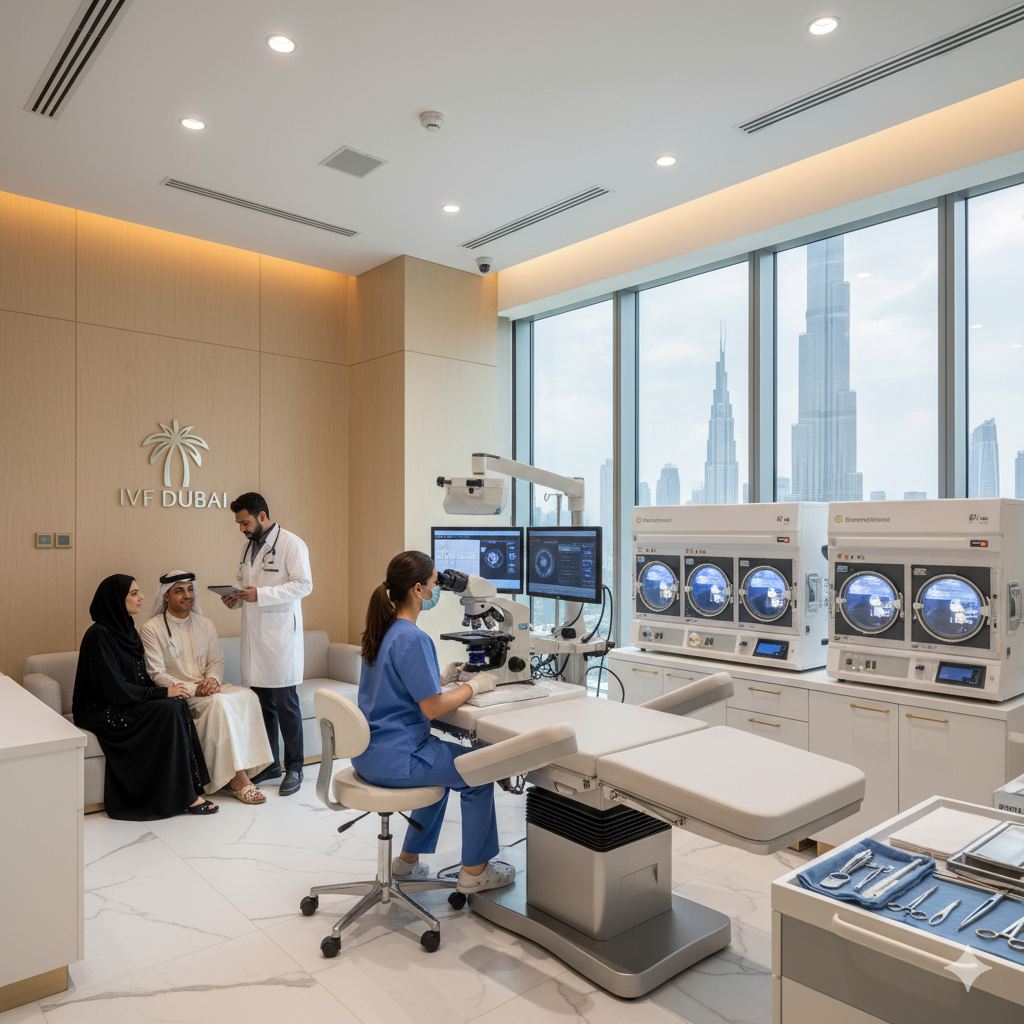
Not all fertility clinics are created equal. Here’s how to identify the best facility for your needs.
Accreditation and Licensing
Verify that your chosen clinic holds:
- Current licensing from Dubai Health Authority (DHA) or equivalent regulatory body
- International accreditation from JCI, CAP, or ISO
- Membership in professional societies like ESHRE (European Society of Human Reproduction and Embryology) or ASRM
Success Rates and Transparency
Look for clinics that:
- Publish age-stratified success rates
- Report both pregnancy rates and live birth rates
- Explain their calculation methodology
- Provide realistic expectations based on your individual circumstances
- Offer to discuss outcomes for patients with similar profiles to yours
Laboratory Standards
The embryology laboratory is where the critical work happens:
- Ask about embryologist qualifications and experience
- Inquire about quality control procedures
- Understand what technology is available (time-lapse imaging, PGT-A capability)
- Check how the lab monitors environmental conditions
Doctor Credentials and Continuity of Care
Consider:
- Where your doctor trained and how long they’ve practiced reproductive medicine
- Whether you’ll see the same doctor throughout your treatment or multiple providers
- The doctor’s philosophy on single embryo transfer vs. multiple embryo transfer
- Communication style and willingness to answer questions
International Patient Services
Clinics experienced with medical tourists offer:
- Dedicated international patient coordinators
- Assistance with travel and accommodation arrangements
- Flexible appointment scheduling
- Telemedicine follow-up options
- Clear pricing with no hidden fees
- Experience working with patients from your home country
Preparing for Your IVF Journey in UAE
Optimal preparation increases your chances of success and reduces stress during treatment.
Medical Preparation (2-3 Months Before)
Complete Preliminary Testing: Get as many diagnostic tests completed at home as possible. Most results remain valid for 6-12 months, saving time once you arrive in the UAE.
Optimize Your Health: Focus on:
- Achieving a healthy BMI (18.5-25)
- Taking prenatal vitamins with folic acid (400-800 mcg daily)
- Reducing or eliminating alcohol consumption
- Quitting smoking (both partners)
- Managing stress through meditation, yoga, or counseling
- Getting adequate sleep (7-9 hours nightly)
Address Medical Conditions: Work with your primary care physician to optimize management of conditions like diabetes, thyroid disorders, or hypertension before beginning fertility treatment.
Logistical Preparation (1-2 Months Before)
Documentation: Gather and organize:
- Marriage certificate with certified translation
- Medical records and test results
- Valid passports with at least 6 months remaining validity
- Travel insurance documentation
- Emergency contact information
Financial Planning: Confirm:
- Total treatment costs including all potential add-ons
- Payment methods accepted
- Currency exchange considerations
- Travel and accommodation budget
Work and Personal Arrangements: Plan for:
- 2-3 weeks away from work (consider bringing a laptop if needed)
- Someone to care for pets or children at home
- Automatic bill payments and mail handling
- Who you’ll tell about your treatment (and who you won’t)
Mental and Emotional Preparation
Set Realistic Expectations: Understand that IVF success is probable but not guaranteed. Most patients require more than one cycle to achieve pregnancy.
Build Your Support System: Identify people who will provide emotional support during and after treatment. This might include:
- Your partner or spouse
- Close family members or friends
- A therapist specializing in fertility issues
- Online support communities
Practice Self-Care: Develop stress-management techniques you can use during treatment:
- Mindfulness or meditation apps
- Light exercise routines appropriate during IVF
- Enjoyable activities to occupy your mind during the two-week wait
- Journaling or creative outlets
After Treatment: Follow-Up Care
Your fertility journey doesn’t end when you leave the UAE, and comprehensive clinics provide ongoing support.
If Your Cycle Is Successful
Early Pregnancy Monitoring: Your UAE clinic will typically monitor you through early ultrasounds at 6-7 and 8-9 weeks of pregnancy before releasing you to obstetric care.
Transitioning to Local Care: You’ll need to:
- Find an obstetrician in your home country
- Transfer medical records from your fertility clinic
- Explain that yours is an IVF pregnancy (which may be considered higher-risk requiring additional monitoring)
- Continue any medications prescribed by your fertility doctor until instructed otherwise
Long-Term Follow-Up: Many UAE clinics maintain contact with patients throughout pregnancy and beyond, celebrating successes and gathering outcome data.
If Your Cycle Is Unsuccessful
Follow-Up Consultation: Schedule a detailed review with your doctor to discuss:
- What went well during the cycle
- Potential factors that may have prevented success
- Recommended changes for a subsequent cycle
- Whether additional testing is warranted
- Timeline for trying again
Frozen Embryo Transfer: If you have frozen embryos, you can return to the UAE for a frozen embryo transfer cycle, which is:
- Less expensive (AED 8,000-12,000)
- Less time-consuming (typically 1 week in the UAE)
- Less physically demanding (no ovarian stimulation)
- Often successful after a fresh cycle didn’t work
Taking Time to Decide: There’s no rush to immediately begin another cycle. Many patients benefit from:
- A few months to recover physically and emotionally
- Time to reassess finances and logistics
- Opportunity to make health improvements before trying again
Making Your Decision: Is UAE Right for You?
Choosing where to undergo IVF treatment is deeply personal and depends on multiple factors unique to your situation.
UAE May Be Ideal If You:
- Face long waiting lists or limited access to IVF in your home country
- Seek cost savings without compromising on quality
- Value cutting-edge technology and modern facilities
- Appreciate the efficiency of the UAE healthcare system
- Want to combine treatment with a comfortable, even enjoyable, travel experience
- Need multilingual medical care
- Prefer privacy and discretion
Consider Other Options If You:
- Have strong emotional attachments to receiving treatment near home
- Already have an excellent relationship with a fertility doctor in your home country
- Face medical complications requiring close, ongoing monitoring
- Have concerns about traveling during treatment
- Prefer treatment in a facility you can physically visit multiple times before committing
Taking the Next Step with Fertycure
If you’re ready to explore IVF treatment in the UAE, Fertycure specializes in making the entire process seamless for international patients.
What Fertycure Offers
Personalized Clinic Matching: We connect you with the UAE fertility clinic best suited to your specific needs, medical history, and preferences.
Comprehensive Coordination: From your first inquiry through pregnancy testing, we handle:
- Medical record review and preliminary consultations
- Treatment scheduling and appointment coordination
- Travel arrangements including flights and accommodation
- Airport pickup and transportation to appointments
- Translation services if needed
- 24/7 support throughout your stay
Transparent Pricing: We provide detailed cost breakdowns with no hidden fees, helping you budget accurately for your treatment.
Ongoing Support: Our relationship doesn’t end when you leave the UAE. We maintain contact throughout your journey and celebrate your success.
How to Get Started
Step 1: Contact Fertycure for a free initial consultation to discuss your fertility goals, medical history, and questions about treatment in the UAE.
Step 2: We’ll recommend suitable fertility clinics and arrange virtual consultations with doctors who specialize in cases like yours.
Step 3: Once you’ve selected a clinic and doctor, we’ll coordinate all logistics for your treatment cycle.
Step 4: Travel to the UAE knowing that every detail has been arranged and that support is always available when you need it.
Frequently Asked Questions
Q: How long do I need to stay in the UAE for a complete IVF cycle?
A: Plan for 2-3 weeks total. Some patients return home after egg retrieval and come back for embryo transfer, though most prefer to stay for the complete cycle.
Q: Can I bring my medications from my home country?
A: Many patients purchase some medications at home for cost savings. Ensure you have proper documentation and original packaging. Your clinic can advise on which medications must be obtained in the UAE.
Q: What happens if I get OHSS (ovarian hyperstimulation syndrome)?
A: UAE clinics monitor patients carefully to minimize OHSS risk. If it occurs, you’ll receive medical care in the UAE. Travel insurance should cover complications arising from treatment.
Q: Can same-sex couples or single individuals undergo IVF in the UAE?
A: Current UAE regulations require couples to be married according to legal documentation. It’s important to discuss your specific situation with your chosen clinic.
Q: What if I need to do multiple cycles?
A: Many patients return to the UAE for additional fresh cycles or frozen embryo transfers. Clinics often offer package pricing for multiple cycles with cost savings.
📞 Start Your IVF Journey in UAE with Fertycure
Let us help you understand costs, choose the best doctor, and plan your treatment.
🌐 Website: www.fertycure.com
📱 WhatsApp: +918850937184
Disclaimer: This article is for informational purposes only and does not constitute medical advice. Individual results vary based on numerous factors. Always consult with qualified fertility specialists about your specific circumstances. Success rates and costs mentioned are approximate and may vary between clinics and over time.
Sources:
- UAE Ministry of Health and Prevention – Assisted Reproductive Technology Guidelines
- American Society for Reproductive Medicine (ASRM) – IVF Success Rate Data
- European Society of Human Reproduction and Embryology (ESHRE) – International Treatment Standards
- Joint Commission International (JCI) – Healthcare Accreditation Standards